 Women For Restore
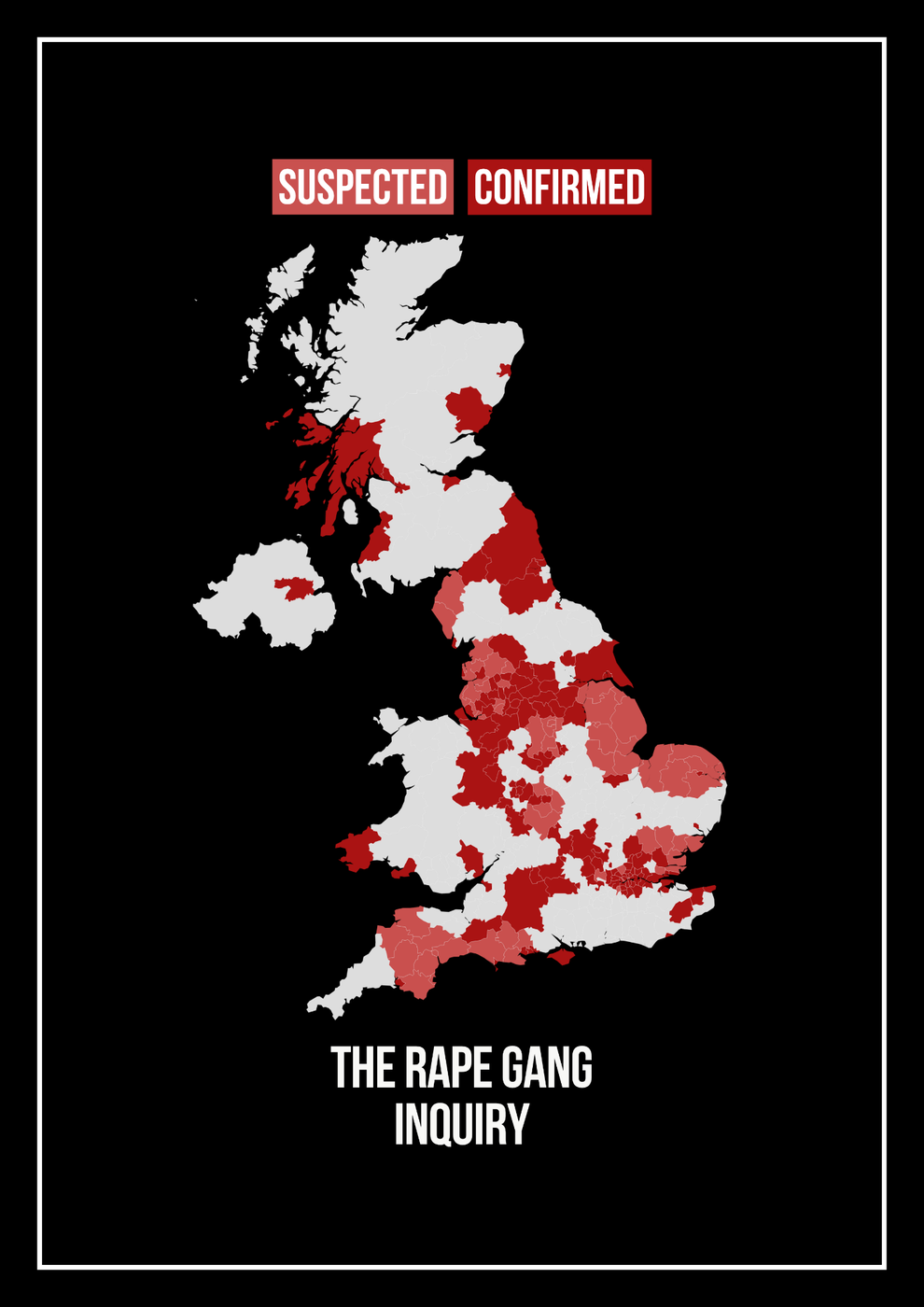
The Rape Gang Inquiry
The independent inquiry into rape gangs and group-based child sexual exploitation, instigated by Rupert Lowe MP, published its report in June 2026.
Content warning: the report contains detailed accounts of sexual abuse of children. If it affects you, support is available from the NSPCC on 0808 800 5000, Rape Crisis on 0808 500 2222, and Samaritans on 116 123, any time, day or night.
Read the full report
The full report is published on the inquiry's own website.
This link takes you to an external website. Women For Restore is not responsible for its content.
One of the most horrifying failures in modern British history
The Inquiry examined the systematic, organised sexual exploitation of vulnerable children, predominantly white girls, by grooming gangs across the United Kingdom. It is a report by Rupert Lowe MP and a team of experts and contributors, published in June 2026.
What victims suffered
Repeated rape and gang rape, trafficking, physical and emotional torture, forced pregnancy and abortion, and forced Islamic conversion.
How the gangs operated
Grooming with gifts, attention, alcohol, drugs, cigarettes and false relationships. Girls were moved between locations in taxis and cars, passed between multiple men and repeatedly abused, and controlled through violence, threats, blackmail and intimidation.
Who the perpetrators were
The Inquiry found the vast majority of offenders were men of Pakistani Muslim heritage. Around 87% of those convicted in the group-based child sexual exploitation cases studied had distinctively Muslim names, far above the Muslim share of the UK population. Dr Taj Hargey has said it "seems like 95 per cent". Smaller numbers came from other backgrounds, including Somali, Iranian, Syrian and Turkish offenders. It concludes cultural, communal, clan and religious factors played a significant role and must be openly examined.
Institutional failure
Police, social services, schools, the NHS, councils, licensing authorities and politicians of all parties repeatedly failed to protect children. Victims were disbelieved, blamed or criminalised, evidence was not acted on, and fear of accusations of racism discouraged action.
Recommendations
- Stronger sentencing for grooming gangs
- Record and publish offenders' ethnicity
- Hold officials and institutions accountable
- Specialist training for frontline services
- Stronger multi-agency safeguarding
- Law reform targeting grooming gangs
- More support for survivors
- Better data, transparency and national coordination
The impact on survivors
Lifelong trauma: PTSD, depression, self-harm and suicidal thoughts. Broken families, lost childhoods and lost futures. Many are still waiting for justice and acknowledgement. Survivors showed incredible courage in coming forward. They are at the heart of the Inquiry, and the report is dedicated to them.
Truth. Justice. Accountability. Reform.